


Step-by-Step Guide to Pet Relocation: What Dubai Pet Parents Need to Know
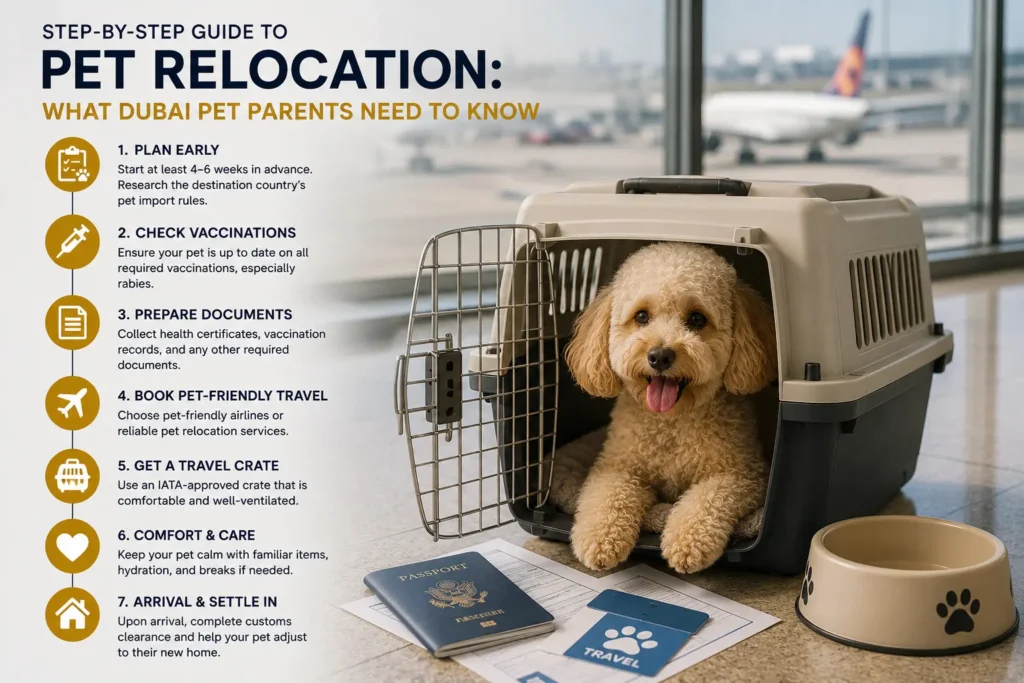
Moving abroad with your pet is one of the most stressful things a pet parent can navigate.
The paperwork alone is confusing. Every country has different rules. Airlines have their own requirements. And in the middle of it all, you’re trying to keep your furry family member calm and safe through a process they don’t understand at all.
The best pet relocation service takes all of that off your plate. But even with professional support, knowing what’s involved helps you prepare with confidence.
Here’s the full picture — step by step.
Moving soon? See how Fancy Furry handles pet relocation in Dubai
Best Pet Relocation Service: The Complete Step-by-Step Process
Step 1 — Start Early. Much Earlier Than You Think
Pet relocation isn’t something you organize in the final week.
Some countries require vaccinations, tests, and treatments to be completed in a specific order — and within a strict timeline. The AVMA notes that some countries require steps related to identification, vaccinations, tests, and treatments to be done in a precise order and within a given timeline — meaning timing isn’t flexible.
Start the process at least 3–6 months before your move date.
Step 2 — Get the Documents Right
This is where most pet parents get overwhelmed. Here’s what’s typically required:
| Document | What It Is |
| Health Certificate (CVI) | Signed by an accredited vet confirming your pet is disease-free and meets destination requirements |
| Microchip Record | Most countries require ISO-compliant microchipping before travel |
| Vaccination Records | Rabies vaccination is almost universally required — timing matters |
| Import Permit | Required by some countries before the pet even boards |
| Parasite Treatment Proof | Some destinations require tapeworm or tick treatment within a specific window |
Every destination has different requirements. Check well in advance — and keep copies of everything.
Step 3 — Choose the Right Carrier
The carrier isn’t an afterthought. It’s a safety item.
The AVMA specifically highlights that defective crates or carriers are the most common cause of escaped or injured animals during air travel. Airlines also have their own size and construction requirements — IATA-approved carriers are the standard for international flights.
What to look for in a travel carrier:
- A constructed structure that is solid and vented, no thin doors, or loose latches.
- Adequate room for your pet to stand, turn as well as to lie down.
- IATA airline approval label
- Familiar bedding inside to ease the journey
Introduce the carrier weeks before travel — not the morning of departure.
Step 4 — Book a Pet-Friendly Flight Carefully
Not every airline allows you to bring pets.
Some allow small pets in-cabin. Others require pets to travel as checked cargo. Flat-faced breeds like Bulldogs and Pugs often can’t fly because altitude can make breathing difficult for them. It’s best to check with the airline early, book in advance, and keep your vet’s contact details handy on the day you travel.
More pet travel tips on our blog
Step 5 — On Travel Day: Keep It Calm
Your pet reads your energy. If you’re frantic, they feel it.
- Feed a light meal 4–5 hours before departure — not right before
- Put a used t-shirt or a comfortable blanket into the carrier
- Don’t over-reassure; a calm and matter-of-fact demeanor is best.
- Try to maintain their regular schedule up until they leave.
Conclusion
Pet relocation isn’t frightening, although it’s complicated.
If you arrange the timeline, the correct documentation, get an approved carrier, and a calm approach on travel day, your furry family member can arrive safely and settle into their new home without unnecessary stress.
The best pet relocation service in Dubai handles all of this with you — and for you.
Get in touch with Fancy Furry to start planning your pet’s move
FAQs
What are the steps involved in planning for the relocation of pets from Dubai?
At least 3 to 6 months in advance of your move date. Many countries impose certain conditions on the order of vaccinations, health examinations and treatments to be undertaken and the length of time for which they have to be completed. The single most frequent cause of delays or denials in crossing the border with pets is starting late.
What documents are needed for international pet relocation?
Most trips start with a health certificate from a registered vet, microchip record, and current vaccination card with rabies clearly mentioned. Some destinations also ask for an import permit or parasite treatment note. Since every country follows its own rules, it is safest to confirm the checklist with the destination embassy or agriculture office before planning the move.
Key Takeaways
- Start early. Good pet relocation begins months ahead with paperwork, airline rules, and carrier checks handled in time.
- Health papers, microchip record, vaccines, and permits must follow the right order for the country you are flying to.
- A proper IATA carrier and a familiar-smelling blanket inside help your pet stay calmer during travel
Social Snippet:
Going overseas with your pet? The paperwork, flights and carrier rules are much more involved than they seem to be. Here is the step-by-step guide which every Dubai pet parent must have before moving.