
If you’re planning to move abroad and take your pet with you, the first reaction is usually not excitement, it’s confusion.
Most pet parents searching for pet relocation Dubai quickly realize something:
There’s a lot more paperwork involved than expected.
And honestly, it can feel a bit overwhelming at the beginning. Not because it’s impossible, but because everything has to be done in the right order, at the right time, with the right approvals.
Once you understand the flow, though, it becomes much easier to manage.
Let’s walk through it in a clear, practical way, no jargon, no unnecessary complexity.
Pet Relocation Is More Than Just Booking a Flight
A common misunderstanding is thinking pet relocation is similar to human travel. It isn’t.
When a pet travels internationally, airlines and governments want to make sure:
- The pet is healthy and safe to fly
- Vaccinations are up to date
- Disease risks are controlled
- All import rules of the destination country are followed
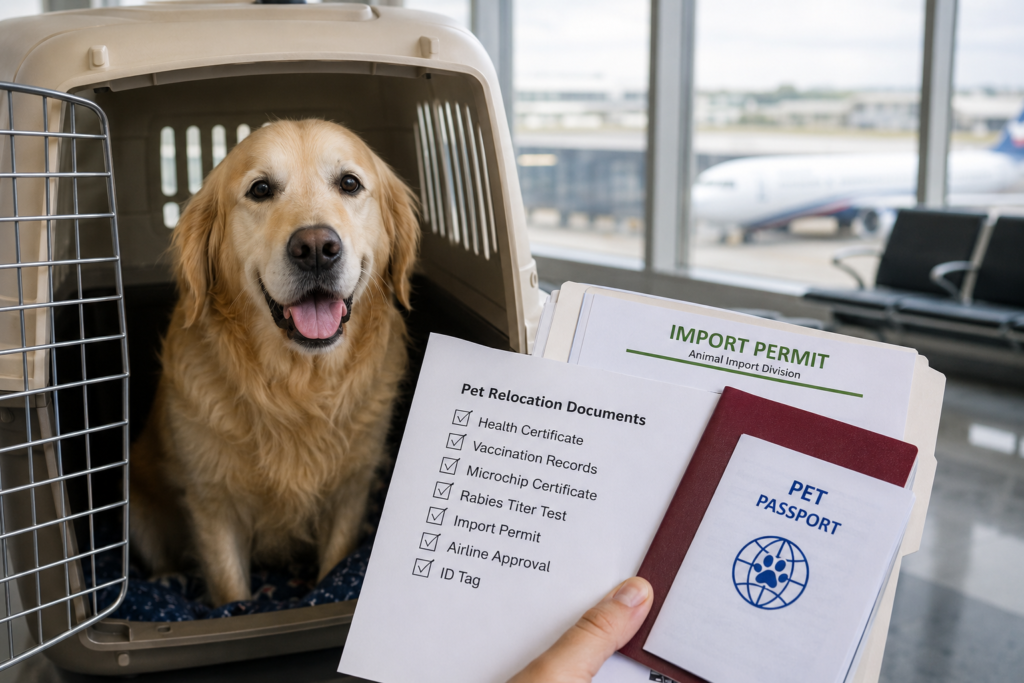
So instead of just a ticket, your pet’s journey depends on a set of documents that prove everything is in order.
1. Microchip: The First Requirement
Before anything else, your pet must have a microchip. Think of it as your pet’s international ID.
It:
- Identifies your pet across borders
- Links all medical and vaccination records
- Is required for nearly every permit
Without a microchip, the relocation process cannot even begin.
2. Vaccinations (Especially Rabies)
Vaccinations are one of the most important parts of pet relocation Dubai requirements.
The most essential one is rabies, but depending on your pet and destination, other vaccines may also be required.
Usually, you’ll need:
- Rabies vaccination (mandatory almost everywhere)
- Core dog vaccines like DHPP
- Updated booster shots if needed
What often surprises pet owners is timing, vaccines must be done within specific periods before travel. If the timing is off, you may need to wait before flying.
3. Import Permit From the Destination Country
This is one of the most important documents, and often the most overlooked.
An import permit is:
- An official approval from the country you are moving to
- Permission for your pet to enter that country
- Valid only for a limited period
Without this document, your pet cannot legally enter the destination country, even if everything else is ready. Different countries have very different rules, so this step depends heavily on where you’re going.
4. UAE Export Permit (MOCCAE Approval)
Since you are departing from Dubai, you will also need an export permit from UAE authorities.
This document:
- Confirms your pet is allowed to leave the UAE
- Verifies vaccination and health compliance
- Is required at the airport during departure
It’s usually one of the final approvals before travel.
5. Veterinary Health Certificate
Just before travel, your pet must be checked by a licensed veterinarian.
This certificate confirms:
- Your pet is healthy and fit for travel
- No signs of contagious illness
- Vaccination records are valid and complete
Most airlines require this to be issued within a short window before the flight—so timing matters a lot here.
6. Rabies Titer Test (Only for Certain Countries)
Some destinations require an additional blood test called a rabies titer test.
This test:
- Checks if your pet has enough rabies antibodies
- Is mandatory for specific countries with stricter rules
- May require waiting periods after testing
Not every relocation needs it, but if your destination does, it must be planned early.
7. Airline Approval and Travel Crate Requirements
Even if all documents are ready, airlines still need to approve the travel setup.
They will check:
- Whether your pet crate is IATA-approved
- If your pet fits comfortably inside
- Breed restrictions (some airlines restrict certain breeds)
- Weather and cargo conditions for the flight
Your pet’s crate should allow them to:
- Stand up comfortably
- Turn around easily
- Lie down without restriction
A crate that doesn’t meet standards can result in last-minute refusal to travel.
8. Customs Clearance at Arrival
Once your pet arrives, the destination country will re-check everything:
- Microchip details
- Vaccination records
- Import permit
- Health certificate
If everything matches, your pet is cleared and released. This step is usually smooth when paperwork is properly prepared.
Why the Process Feels Complicated (But Isn’t Really)
Most people feel stressed about pet relocation because all the steps seem separate.
In reality, it’s a sequence:
Each document depends on the one before it. Once you see it as a timeline instead of a checklist, it becomes much easier to follow.
Common Mistakes Pet Owners Make
Here are a few things that often cause delays:
- Starting the process too late
- Missing vaccination timing windows
- Applying for permits in the wrong order
- Booking flights before approvals are ready
- Not checking destination-specific rules
Most issues are avoidable with early planning.
Final Thoughts
Pet relocation from Dubai can feel like a lot at first, but it’s manageable when broken into steps.
The key is not rushing and not guessing. Every document has a purpose, and every approval is there to ensure your pet travels safely.
At Fancy Furry Pet Care, we know how emotional it is to travel with pets. They’re not just animals, you’re responsible for their comfort, safety, and peace of mind throughout the journey.
With the right preparation, pet relocation Dubai becomes less stressful and much more predictable.
If you’re planning pet relocation Dubai, the most important thing is simple: start early, stay organized, and don’t leave approvals for the last minute.
Because when everything is done right, your pet’s journey becomes safe, smooth, and far less stressful, for both of you.
FAQs
1. How long does pet relocation from Dubai usually take?
It depends on the destination, but most relocations take a few weeks because of vaccination timing, permit approvals, and airline scheduling.
2. Do all countries require the same documents?
No. Each country has its own rules. Some require only basic vaccination records, while others need import permits and rabies titer tests.
3. Can my pet travel without a microchip?
No. A microchip is mandatory for international pet travel and is required for identification and documentation.
4. Is pet relocation stressful for pets?
It can be a new experience for them, but proper preparation, the right crate, and calm handling make a big difference.
5. Do airlines allow all dog breeds to travel?
Not always. Some airlines restrict certain breeds due to safety or health concerns, especially brachycephalic (short-nosed) breeds.
Key Takeaways
- Pet relocation is a step-by-step process, not a single task
- Microchipping and vaccinations are the foundation
- Import permits and export permits are both required
- Timing of vaccines and tests is extremely important
- Airline approval depends on crate standards and pet suitability
- Each country has different rules—always check early
- Planning ahead reduces stress and avoids delays
- Proper documentation ensures safe and smooth travel